
Wildfire Update – 2026
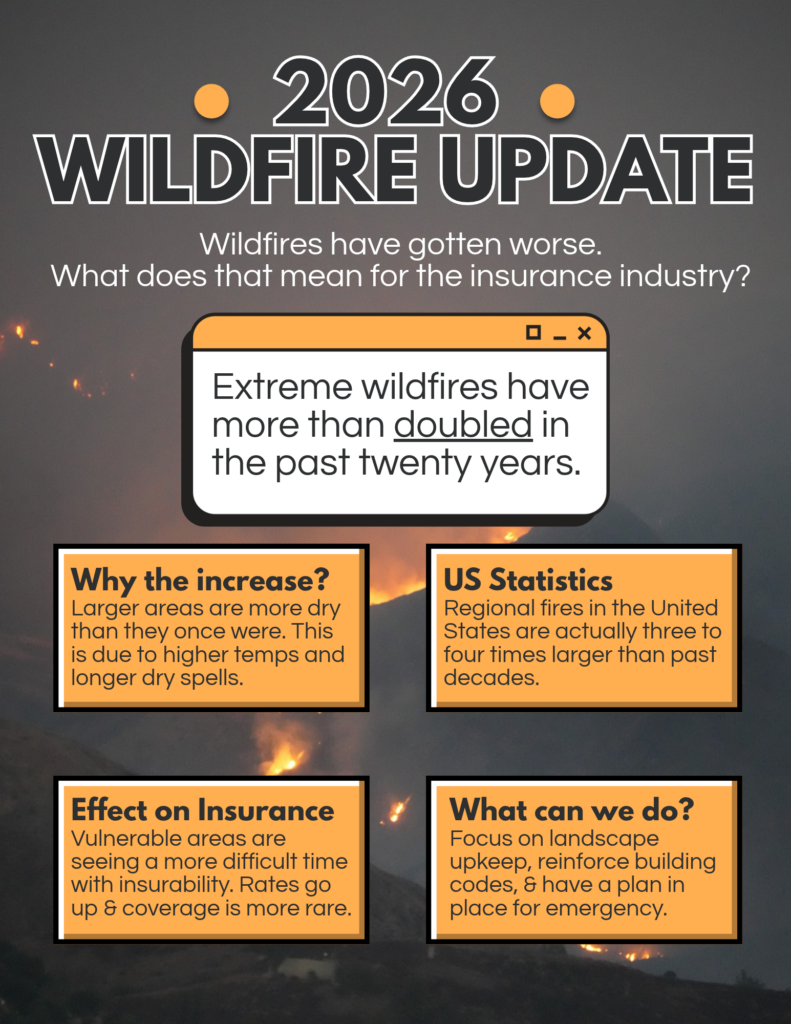
Extreme Wildfires have increased by over double in the past twenty years.
Why have they increased? The world is warmer and more dry in general than it was twenty years ago. This has caused dry spells to last longer, increasing the area of wildfires along with their duration. Climate change including warmer Spring and Summer seasons dries out the soil faster. Autumns have also been more dry, which extends the window of fire risk.
In the US, some regions are seeing an uptick in wildfire activity that is three to four times larger than it was. US forest tree cover is burning twice as much as it has in the past due to fires ravaging them.
What does this mean for insurance? Simply put, it’s harder to obtain insurance in areas affected by these fires. Many carriers recognize that they cannot sustain large losses caused by wildfire areas, causing them to pull out of a region whose fire score is too high. This means that individuals living in areas with high Protection Classes (or fire scores) have a tough time finding coverage. For those that can find coverage, their premiums are often higher to offset the risk of insuring a property in a high fire-risk zone.
Is there anything that my community can do? Yes. Several steps can be taken to reduce the risk of extensive damage caused by wildfire.
- Clear brush, grass, dead limbs, and anything else that can act as kindling within 100 feet of a flammable structure to create a barrier that will slow down the fire spread.
- This can also be applied to the surrounding forests in your neighborhood – by clearing dead and dry plants you are giving the fire less fuel.
- By having trained professionals burn forest floor debris in cooler months, it lowers the risk during fire season.
- Install fire-resistant materials such as metal roofs, vents, and dual-pane windows.
Concerned about fire? Give us a call! We are happy to review your policy to ensure that you have adequate coverage in the event of a fire. Some of our carriers even have measures in place for wildfire mitigation if your home is in a high fire-risk zone.